

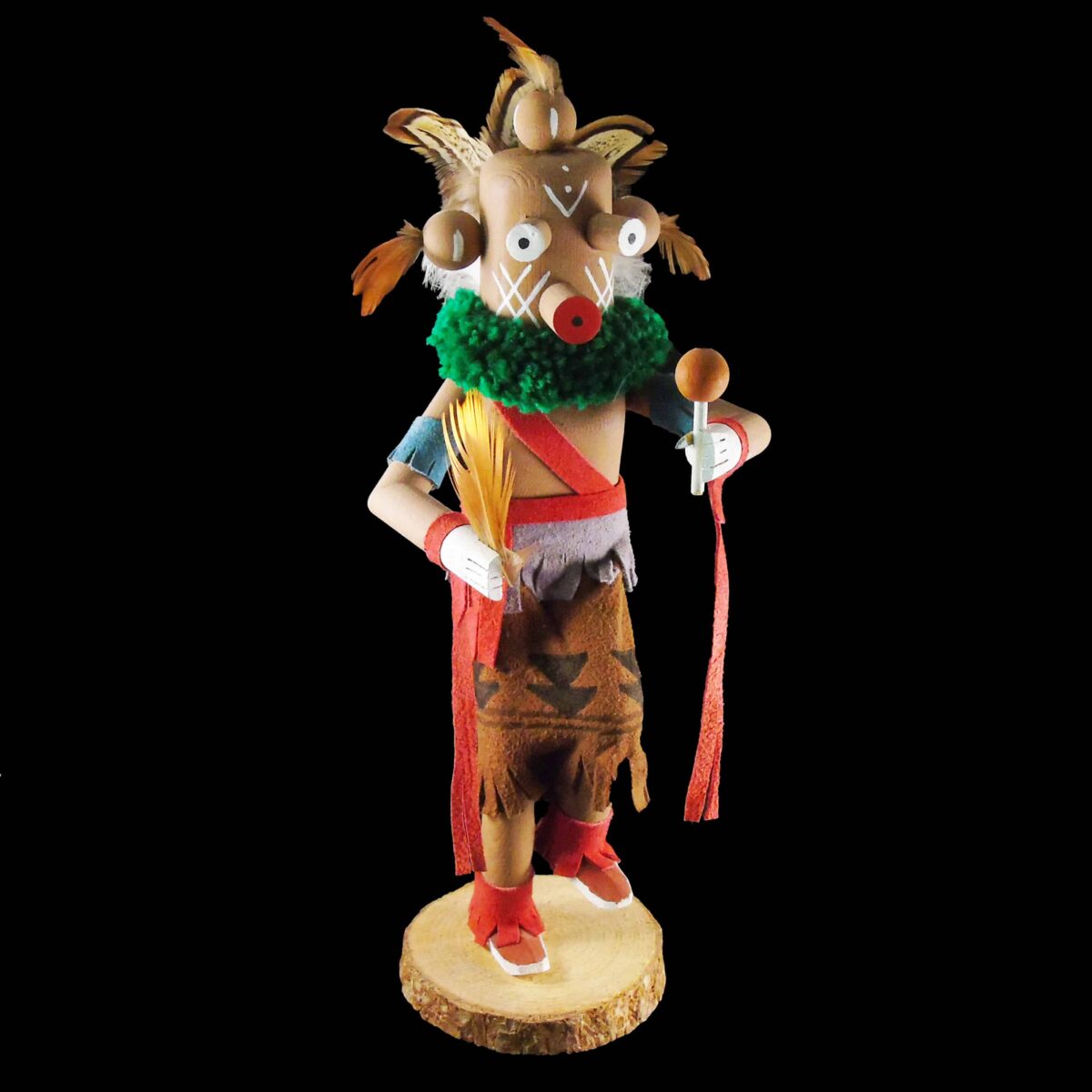


Hand Made Native American Navajo Mudhead Kachina
$69.00
Only 1 left in stock
Additional information
| Weight | 3.5 lbs |
|---|---|
| Dimensions | 8 × 8 × 14 in |
Details
- 30 day returns
- Secure checkout
- Free shipping
- 6-month warranty
Hopi katsina figures, also known as kachina dolls, are figures carved, typically from cottonwood root, by the Hopi people to teach and instruct their people about katsinas, the immortal beings or spirits that bring rain and fertility to crops, cure diseases, punish transgressions and control other aspects of the natural world and society, acting as messengers between humans and the spirit world.
The Hopi were the original Katsina Doll carvers, using a single piece of cottonwood root. The Navajo have often borrowed from many tribes and began carving their own style of kachina dolls, adding leather, feather, beads, and turquoise. These kachina dolls can be made from other sources of wood and are not intensely carved from one piece of wood such as the Hopi method. They can be several pieces of wood glued or pinned together. Therefore they can be made much more quickly and are usually less expensive than an original Hopi Katsina.
The Hopi tribes are the original Katsina carvers but the Navajo Kachina creativity and use of leather, feather, beads, and turquoise make for some beautiful art pieces as well and have a following of their own. Navajo Kachina dolls may not have the same tribal significance as the original Hopi Kachina dolls.
The Navajo mudhead kachina, also known as Koyemsi or Koyemsi’taka, is a significant figure in Navajo culture and ceremonial practices. The term “mudhead” refers to the characteristic appearance of this kachina, with a mask or headdress that has a round, clown-like face covered in mud. The mudhead kachina holds various meanings and plays multiple roles within Navajo ceremonies and rituals. Here are some of the symbolic interpretations associated with the mudhead kachina:
- Humor and Playfulness: Mudhead kachinas are often regarded as tricksters and entertainers. They bring laughter, levity, and joy to ceremonial events, using humor and mischief to engage the audience and create a festive atmosphere.
- Social Commentary: The mudhead kachina sometimes serves as a social commentator, highlighting societal issues, flaws, or challenges through their performances. They may use satire and comedic antics to address serious matters and provoke thoughtful reflection.
- Sacred Clowns: In Navajo culture, the concept of sacred clowns is present, and mudhead kachinas embody this archetype. They blur the boundaries between the sacred and the profane, reminding people of the importance of balance, humility, and not taking oneself too seriously.
- Wisdom and Teaching: Despite their playful nature, mudhead kachinas are also regarded as bearers of wisdom and knowledge. They may impart important life lessons, cultural teachings, and moral values through storytelling, gestures, or symbolic actions during ceremonies.
- Healing and Cleansing: Mudhead kachinas are associated with purification rituals and are believed to possess the power to cleanse and restore balance. Their presence in ceremonies helps to dispel negative energies, promote harmony, and facilitate spiritual healing.
Artist: L.L., Navajo
Size: 11″ x 4″
Reviews